How to Contain a Quantum System
By Andrew Sammelson
 Quantum computers have undeniably made their mark on society in the recent years. Scientists from around the world have been captivated by the possibility of unfathomable computational power. Who wouldn’t want the ability to solve problems that would take our best supercomputers hundreds of years? Considering this ridiculous upside potential, how do these researchers contain the extremely delicate quantum systems and how do simple material swaps revolutionize the field?
 To start with some background information; quantum computers function using qubits. A qubit is the quantum counterpart to a classical bit (a way to store either a one or a zero for use in computing). A qubit can also exist quantized in one of two different set energy levels. For example, a hydrogen atom can spin with or against an external magnetic field therefore creating two quantized energy levels (we can define the lower energy option as 0 and the higher as 1).
The benefit of said qubit is that quantum systems can exist in superposition. This means that it can not only be a “1” or a “0”, but can also be both at the same time. Obviously, this is a simplified explanation, but the repercussion of this idea is that when computing a complex problem, a qubit can probe both possibilities simultaneously and through constructive and destructive interference can return the best answer. The most practical type of qubit is a superconducting qubit which is used in most quantum computers so I will focus on the structure of said qubit.
 As the name suggests, the qubit consists of a superconducting loop separated by an insulating layer. This allows for the separation of energy levels into different quantum states via the quantum tunnelling of electrons through the insulator. This is understandably extremely complex but the relevant part to know is that this system operates under quantum principles and has 2 unique states. Finally, the quantum state is carefully read with a finely tuned microwave which interacts differently with the qubit depending on which quantum state that it is in.
Now that we know just enough about how they work we can talk about how scientists have contained these systems. Originally when these superconducting qubits were first designed the information meant to be encoded in the qubit was lost to noise in less than a nanosecond which does not bode well for computing anything significant. The first major improvement made was to insert a capacitor alongside the insulator in the loop creating the first a transmon qubit. This reduced the noise in the system majorly which allowed the system to maintain its quantum state for tens of microseconds.
Tens of microseconds is still a tiny amount of time but it is over a thousand times better than the first superconducting qubits. Since the qubits in a system are all linked together, the increase in lifetime exponentially increases the efficiency of the quantum computer as more qubits are used. This is the reason that increasing the coherence time (how long the qubit holds its state) is so important to the field.
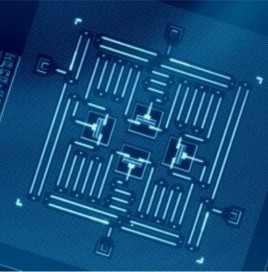 More recently, researchers have shown that they can increase the coherence times by switching the materials used to make the qubit rather than just altering the design. Superconducting qubits typically have a 2d structure with the metal superconducting layer grown on a sapphire substrate. By replacing the original niobium metal with tantalum, the layer was able to be made with fewer microscopic surface defects which in turn increased the coherence times tenfold to hundreds of microseconds. The reason for this increase in coherence is that in a qubit the main source of error is loss of energy. A more uniform layer of conducting metal is less prone to energy loss.

After this change was made, researchers realized that there was a lot of energy loss coming from the sapphire substrate. To remedy this, they tried replacing the sapphire with silicon, a semiconductor widely used in modern computer chips. Since it is so easily available in extremely pure forms, the new qubits would be easier to manufacture. Upon testing the tantalum and silicon fabricated chip the results were shocking. The researchers measured coherence times surpassing one millisecond which was another staggering tenfold increase. According to researchers, “Swapping Princeton’s components into Google’s best quantum processor, called Willow, would enable it to work 1,000 times better”.
All of these aforementioned changes to the hardware of a planar superconducting qubit have revolutionized quantum computing and brought it into the realm of being scientifically useful to compute complex problems in the near future. What might we see happening in this field within the decade? Will these chips potentially revolutionize the lives of consumers in the further future?